 Leadcase
🧗♂️ The Challenge of Receiving Feedback
Have you ever felt strong emotions after someone gave you feedback? It might happen at work, during a project, or in your personal life. You may feel upset, confused, or want to defend yourself. This is normal, but it can make it hard to learn and grow from the feedback.
That’s where the Feedback Staircase comes in. It’s a practical framework that helps you manage your emotional reactions and turn feedback into positive action. By understanding each stage of your response, you’ll become better at handling feedback and using it to grow.
Feedback Staircase Framework
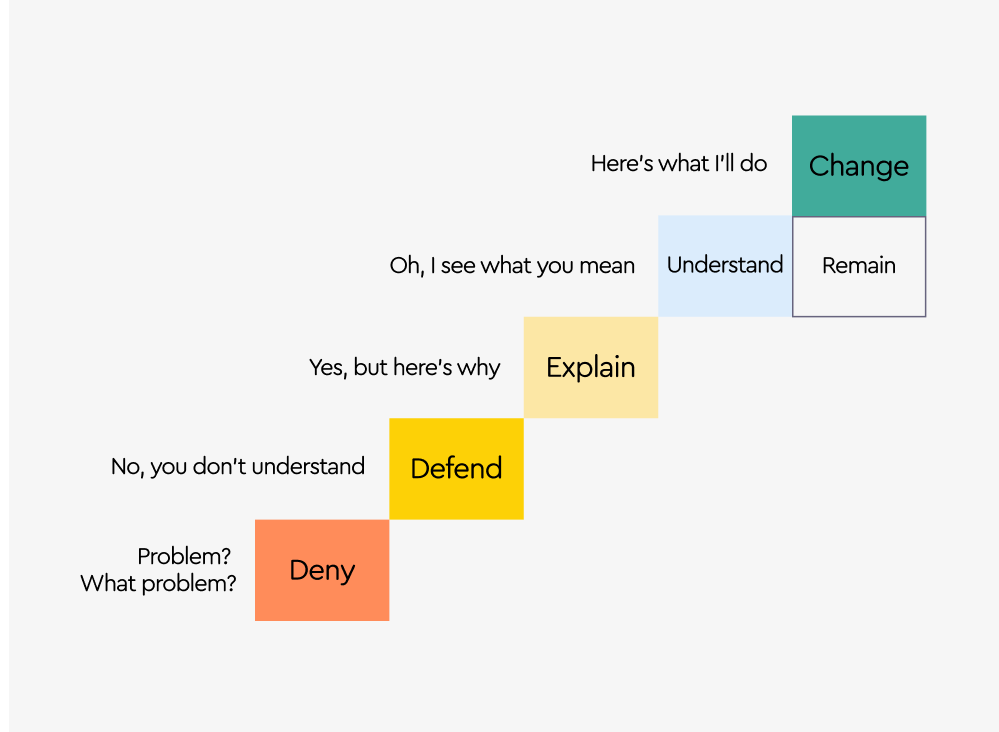
The Feedback Staircase Framework consists of five essential emotional steps.
- Deny: The initial reaction where individuals may reject the feedback outright.
- Defend: The emotional response of justifying one’s actions in response to feedback.
- Explain: Offering reasons for the behavior or performance related to the feedback.
- Understand: Gaining clarity about the feedback and recognizing its validity.
- Change: Making an effort to modify behavior based on the feedback received.
6. Remain: Deciding whether to sustain the change or consciously stay the course.
Let’s explore each step more closely.
🚫 1. Deny
The first reaction to feedback is often denial. This is a natural defensive mechanism where individuals may reject the feedback or refuse to accept its relevance.
Example: “That can’t be right; I always meet my deadlines.”
🛡️ 2. Defend
The second step is to start defending oneself. It’s common to feel the need to justify actions or argue against the feedback received.
Example: “But I was under a lot of pressure and had multiple tasks to handle!”
🗣️ 3. Explain
After the initial defensiveness may come an explanation. Individuals might offer their reasoning behind their actions, which can help clarify the context of the feedback.
Example: “I didn’t mean to overlook that detail. I thought I completed everything necessary.”
🤔 4. Understand
This crucial emotional step involves coming to terms with the feedback. Individuals begin to accept and process the feedback, seeking to understand the concerns raised.
Example: “I see that missing that detail did affect the team’s workflow. That makes sense now.”
🔄 5. Change
The final and most impactful step is change. Individuals commit to making adjustments to their behavior or approach in response to the feedback.
Example: “Moving forward, I will create a checklist to ensure I cover every detail before submitting my work.”
🧭 6. Remain
This final step is about sustaining growth or choosing not to change at all.
Not every piece of feedback requires action. A common anti-pattern is to treat feedback as fact or as something that must be acted upon. That’s not true. Feedback is just information (perspective/data point) not a verdict.
Sometimes, remaining means committing to a new behavior over time, letting it become second nature. Other times, it means staying aligned with your values or intent, even if that means choosing not to change.
Example: “I heard the feedback. I understand where it’s coming from. But I made a conscious choice, and I stand by it.”
📝 How to Apply the Feedback Staircase Framework
The Feedback Staircase is a clear and effective approach to navigating feedback. Follow these steps to make the most of it:
1. Notice the Feedback: Pay attention when someone is giving you feedback, and get ready for any feelings that might come up.
2. Feel Your Emotions: It’s okay to feel things like denial or defensiveness. Don’t judge yourself—just notice how you feel.
3. Ask Questions: Instead of staying defensive, try to understand the feedback better. Ask questions if something isn’t clear.
4. Think It Over: After the conversation, take time to think about the feedback and how it relates to your actions.
5. Take Action: Choose one or two small changes you can make based on the feedback, and start doing them.
By using the Feedback Staircase, you'll not only enhance your ability to receive and process feedback but also foster an environment of continuous personal and professional growth!

